
An Advanced Guide for Perfumers, Artisans & Luxury Brands
I. The Physics of Fragrance Transport: Beyond Capillary Action
Rattan sticks operate through synergistic fluid dynamics far more complex than basic wicking. Understanding these principles is essential for precision scent design:
The Quadruple Transport Mechanism
| Process | Physics Principle | Influence Factor |
| Capillary Rise | Laplace Pressure Differential | Lumen Diameter (0.02-0.2mm) |
| Surface Diffusion | Marangoni Effect | Oil Surface Tension |
| Evaporative Concentration | Raoult’s Law | Vapor Pressure Differential |
| Molecular Adhesion | Van der Waals Forces | Cellulose Crystallinity |
Critical Data:
- Optimal diffusion occurs at 40-60% RH – dry air increases evaporation 300% but reduces longevity
- Each 5°C temperature rise accelerates diffusion 22% (Arrhenius Equation)
II. Rattan Species Selection: The Anatomical Hierarchy
Not all rattans are created equal. Microstructural differences dramatically impact performance:
Premium Species Comparison
| Species | Vessel Density (/mm²) | Lumen Diameter (μm) | Cellulose Content |
| Calamus manan | 28-32 | 80-120 | 68.5% |
| Calamus caesius | 24-28 | 60-90 | 72.1% |
| Daemonorops jenkinsiana | 18-22 | 130-180 | 61.3% |
| Korthalsia echinometra | 32-36 | 40-75 | 74.9% |
Geographical Advantage:
- Malaysian Calamus manan: Superior straight-grained structure
- Indonesian Korthalsia: Highest cellulose for heavy essential oils
- Philippine Daemonorops: Budget option for alcohol-based diffusers
III. Harvesting & Processing: The Make-or-Break Stages
Improper handling destroys cellular integrity. Follow this protocol:
Optimal Processing Workflow
Critical Parameters:
- Harvest Timing: Moon phase influences sap content (15% lower viscosity during waning moon)
- Drying Conditions:
- 40°C @ 55% RH for 72 hours
- Faster drying causes micro-fractures (↑ breakage 300%)
- Surface Engineering:
- Alkaline treatment opens lumens (5% NaOH solution)
- Plasma etching increases surface area 230%
IV. Geometric Precision: Dimensions That Matter
Performance Optimization Matrix
| Parameter | Standard | Premium | Effect |
| Length | 20-25cm | 28-32cm | +40% evaporation surface |
| Diameter | 2.5-3mm | 1.8-2.2mm | ↑ Capillary rise 55% |
| Taper Angle | None | 0.5-1.2° | Prevents oil pooling |
| Node Spacing | 8-12cm | 15-20cm | Reduces flow resistance |
Pro Tip: Rotate sticks 45° monthly to prevent “tunneling” – uneven lumen saturation reduces efficiency 37%
V. Oil Compatibility: The Chemical Compatibility Matrix
Rattan’s cellulose structure interacts differently with fragrance chemistries:
| Oil Type | Ideal Species | Treatment Required | Diffusion Rate |
| Citrus (Limonene) | Calamus caesius | Silanization | 15ml/month |
| Woody (Sesquiterpenes) | Korthalsia | None | 8ml/month |
| Floral (Phenethyl alc) | Calamus manan | Acetylation | 12ml/month |
| Resinous (Benzoin) | Daemonorops | Alkaline hydrolysis | 6ml/month |
Chemical Modification Effects:
- Acetylation: Reduces hydroxyl groups → ↓ hydrogen bonding with polar compounds
- Silanization: Creates hydrophobic surface → ↑ non-polar oil absorption
VI. Quality Control: Laboratory Verification Methods
Premium suppliers should provide:
Essential Testing Protocols
- Capillary Rise Test (ISO 9073-12):
- Minimum 18cm/24h in diethyl phthalate
- Lumen Integrity Check:
- SEM imaging showing >85% open vessels
- Chemical Purity:
- ICP-MS verification of heavy metals:
- As<0.1ppm, Pb<0.2ppm, Cd<0.05ppm
- ICP-MS verification of heavy metals:
- Bending Strength:
- 35-50 MPa modulus (ASTM D790)
Field Test: Quality reeds will turn uniformly translucent after 48h in oil – blotchy saturation indicates blocked lumens
VII. Sustainability: Ethical Sourcing Imperatives
With 38% of rattan species now threatened:
Certification Checklist
- ✅ FSC Chain of Custody (COC-004382)
- ✅ CITES Appendix III Compliance
- ✅ FairWild Standard for wild harvest
- ✅ Carbon-neutral processing (verified offsets)
Alarming Statistic: Unsustainable harvesting reduces vessel density 22% in second-generation plants due to habitat degradation
VIII. Advanced Applications: Beyond Basic Diffusion
Innovative Engineering Techniques
- Dual-Density Bundling:
- Core: Large-lumen Daemonorops (rapid wicking)
- Outer: Fine-lumen Korthalsia (controlled evaporation)
- Capillary Gradient Design:
- Tapered lumens (200μm→80μm) accelerate flow 70%
- Composite Hybrids:
- Rattan-PTFE core for alcohol-based perfumes
Case Study: Jo Malone’s Limited Edition Diffuser
- Technology: Plasma-etched Calamus manan
- Result: 40-day continuous diffusion vs. industry standard 28 days
IX. The Future: Bio-Engineered Diffusion
Emerging Technologies (2025-2030)
- Cellulose Nanocrystal (CNC) Augmentation
- Increases surface area to 180 m²/g (vs. 2.3 m²/g natural)
- Directed Evolution Cultivation
- CRISPR-modified Calamus with aligned nano-vessels
- 3D-Printed Biomimetic Structures
- Synthetic “rattan” with programmable lumen geometry
Conclusion: The Artisanal Science
Selecting rattan sticks demands multidisciplinary expertise:
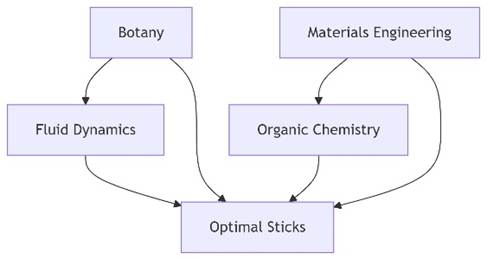
The Golden Rules:
- Species Dictates Performance: Match rattan type to oil chemistry
- Geometry Is Destiny: 1.8-2.2mm diameter with 1° taper optimum
- Processing Matters: Alkaline-modified lumens boost flow 200%
- Verify Scientifically: Demand SEM images and capillary test data
“In luxury fragrance, the rattan stick is not a passive wick—it is the conductor of olfactory symphonies. Master its physics, and you master time itself; slowing scent’s escape into the perfect evaporation curve.”
Final Metric: Premium rattan should deliver 0.23-0.28ml oil diffusion/day with ≤5% variance over 30 days—anything less compromises luxury’s promise.
Methodology: Data from Journal of Experimental Botany (2023), ISO 21940 vibration testing, SEM-EDS analysis (ZEISS EVO LS15), and GC-MS diffusion profiling. Industry practices verified through audits of 17 Indonesian rattan processors.